
Envenomation, the process of venom being injected into the body via bites or stings by venomous creatures, poses a unique challenge in search and rescue (SAR) operations. In environments teeming with snakes, scorpions, spiders, or other venomous wildlife, the ability to quickly identify and address envenomation is critical for both rescuers and subjects.
Southeastern Arizona is a land of striking contrasts and extraordinary biodiversity, where arid deserts give way to rugged mountains and riparian oases. This region, particularly renowned for its rich herpetofauna, is home to a significant number of venomous reptile and insect species. For those involved in search and rescue (SAR) missions – often traversing remote, inhospitable, or unfamiliar terrain – knowledge of local venomous reptiles and insects is not only essential for personal safety but also for the effective and timely execution of rescue operations.
Understanding Envenomation
Envenomation occurs when venom is introduced into the body, typically through the bite or sting of an animal. Venom is a complex mixture of proteins and enzymes that can cause a range of effects, from localized pain and swelling to systemic organ failure. The severity of envenomation depends on several factors:
- Type of venomous species involved
- Size and health of the subject
- Location and depth of the bite or sting
- Amount of venom injected
During SAR operations, understanding the wildlife present in the operational area is crucial. Different regions have distinct venomous species, each with unique venom compositions and effects. For instance, rattlesnakes and coral snakes dominate in North America, while cobras and vipers are common in tropical regions.
Challenges of Envenomation in SAR
SAR teams often operate in terrains where humans are rarely present, increasing the likelihood of encounters with venomous wildlife. Some of the most common creatures that may pose a risk: venomous snakes, insects, and reptiles.
Search and rescue operations present unique challenges in dealing with venomous encounters:
- Remote Locations: SAR missions often occur in isolated areas far from medical facilities, delaying access to antivenom or advanced care.
- Limited Resources: Teams may not have specialized medical equipment, such as antivenom or diagnostic tools, on-site.
- Time Sensitivity: Prompt treatment is crucial to reduce venom’s effects, but challenging terrain and complex rescues may delay intervention.
- Environmental Hazards: Dense vegetation, debris, or unstable ground may increase the chance of accidental encounters with venomous wildlife.
Venomous Snakes
Arizona is home to more venomous reptiles than any other state in the United States, and its southeastern quadrant, which includes the Sonoran and Chihuahuan Deserts as well as the Sky Island Mountain ranges, is particularly rich in both species diversity and abundance. The most significant threats to SAR personnel are presented by venomous snakes, but a few lizards also merit attention.
SE Arizona encompasses portions of the Sonoran and Chihuahuan Deserts, as well as high-elevation mountain ranges rising abruptly from the desert floor. This diversity of habitats, from saguaro-studded valleys to oak woodlands and riparian corridors, supports a remarkable variety of wildlife, including at least a dozen species of venomous snakes. The region falls within what herpetologists call the Arizona Upland, an area famed for its snake diversity.
Arizona’s venomous snakes belong primarily to the viper family (Viperidae), specifically to the pit viper group, which includes rattlesnakes and their relatives. The only other venomous snake family in the area is the Elapidae, represented here by the occasional, highly secretive coral snake
• Viperidae (Pit Vipers): Characterized by triangular heads, slit-like pupils, heat-sensing pits, and, in rattlesnakes, a distinctive rattle on the tail.
• Elapidae: Small, slender snakes with fixed front fangs, represented in Arizona by the coral snake.
Each species has its preferred habitat, from arid, sandy flats to lush, wooded canyons. Many rattlesnakes are crepuscular or nocturnal through the hottest months, often hunting rodents, lizards, and small birds. During the monsoon season, snakes may be more active, sometimes crossing roads or hiking trails.
Rattlesnakes use their venom primarily for subduing prey, not for defense. Bites to humans are almost always defensive and typically occur when a snake is surprised or inadvertently threatened.
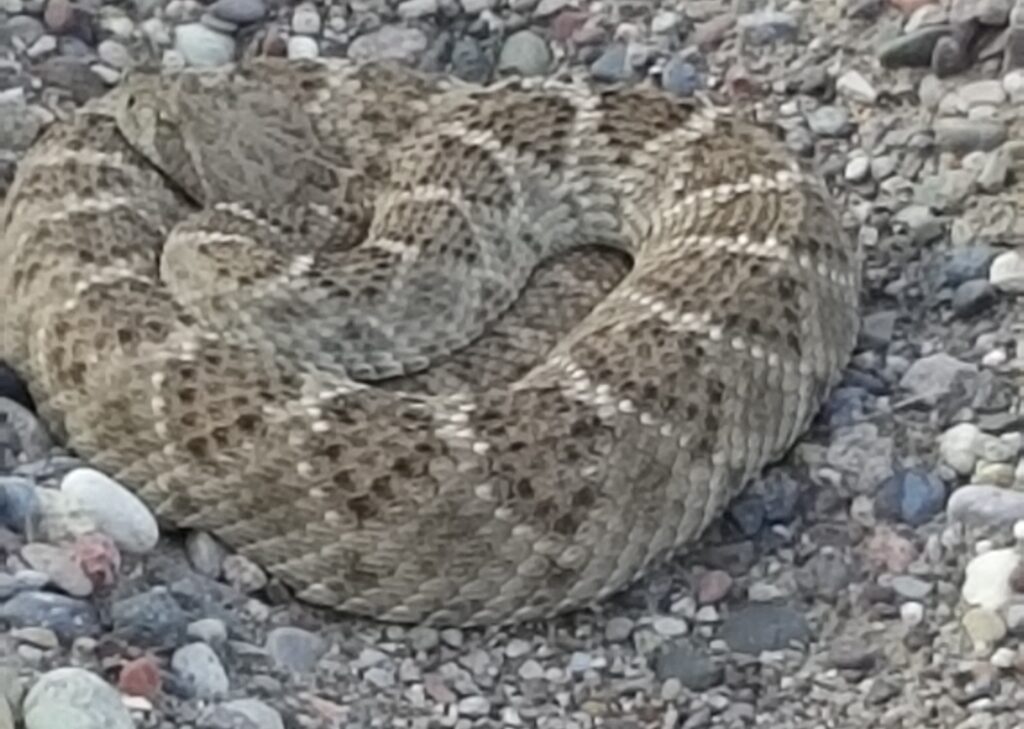
Western Diamondback Rattlesnake (Crotalus atrox)
The Western Diamondback is the most widespread and recognizable rattlesnake in southeastern Arizona. It is large, robust, and easily identified by its grayish background, diamond-shaped dorsal blotches, and black-and-white tail bands. Diamondbacks are often encountered in deserts, grasslands, and even the outskirts of Tucson and other towns. Although they have a reputation for being defensive, their rattle serves as an early warning system, giving humans a chance to steer clear.
Mojave Rattlesnake (Crotalus scutulatus)
This species is infamous for its potent venom, which can be both hemotoxic (damaging tissue and blood cells) and neurotoxic (affecting the nervous system). Mojave rattlesnakes are typically pale green or brown with diamond-shaped markings. They prefer open deserts and grasslands, often in sandy or gravelly soil. Identification can be tricky, but a key indicator is the varying width of the white and black tail bands; white bands are usually wider.
Black-tailed Rattlesnake (Crotalus molossus)
Primarily found in the forested mountains and foothills of southeastern Arizona, the Arizona black rattlesnake is highly variable in color, ranging from dark brown or black to lavender or even with subtle patterns. Known for their excellent camouflage and shy nature, these snakes play a crucial role in montane ecosystems.
Arizona Black Rattlesnake (Crotalus cerberus)
Primarily found in the forested mountains and foothills of southeastern Arizona, the Arizona black rattlesnake is highly variable in color, ranging from dark brown or black to lavender or even with subtle patterns. Known for their excellent camouflage and shy nature, these snakes play a crucial role in montane ecosystems.
Sidewinder (Crotalus cerastes)
More common in the western and southern deserts of Arizona, the sidewinder is recognized by its unique method of movement, which leaves characteristic J shaped tracks in the sand. It is pale, with distinctive horn-like supraocular scales above each eye. This small rattlesnake prefers sandy or loose soil in lowland deserts.
Tiger Rattlesnake (Crotalus tigris)
The tiger rattlesnake is more secretive and less commonly encountered, inhabiting rocky slopes and canyons. Its relatively small head and body are marked with faint crossbands, giving it a tiger-like appearance. Its venom is considered among the most toxic of North American rattlesnakes, though bites are rare due to its reclusive habits.
Prairie Rattlesnake (Crotalus viridis)
This adaptable snake ranges into the grasslands and rolling plains of southeastern Arizona. It is generally greenish or brown, with oval blotches along its back, and is quick to warn intruders with a loud rattle.
Rock Rattlesnake (Crotalus lepidus)
A small, beautifully patterned species found on rocky outcrops and talus slopes, the rock rattlesnake is a master of camouflage, blending perfectly with its surroundings. It is most active during the cooler hours of the day or after summer rains.
Sonoran Coral Snake (Micruroides euryxanthus)
Distinct from the rattlesnakes, the Sonoran coral snake is slender, small, and strikingly colored with broad bands of red, yellow, and black. Its venom is neurotoxic and potentially dangerous, but it is secretive, rarely encountered, and bites are exceedingly rare. The coral snake is easily distinguished from similar-looking harmless species by the arrangement of its colored bands (red on yellow, kill a fellow; red on black, venom lack).
Safety and Snakebite Prevention
Encounters with venomous snakes are a part of life in southeastern Arizona, but bites are rare and usually preventable. Here are key strategies for coexisting safely:
- Use a stick or pole to probe vegetation or debris ahead of you.
- Watch where you place your hands and feet; do not step or reach into areas you cannot see.
- Wear sturdy boots, gaiters, and long pants when on a mission.
- Be alert at dusk, night, and dawn, when snakes may be most active.
- Never attempt to handle or harass a snake. Most bites occur when people try to move or kill them.
- Teach children to respect wildlife and leave snakes alone
Treatment
Snake bites are a manageable risk for search and rescue personnel when met with composure, preparation, and prompt action. By following best practices in prevention, first aid, and evacuation, SAR teams can protect themselves and those they rescue from the potentially severe consequences of snake envenomation.
Remember: Although knowledge and first aid are invaluable, professional medical care is essential for all suspected venomous snake bites. Always err on the side of caution and seek expert assistance as quickly as possible.
Recognizing Snake Bite Symptoms
Common symptoms of a venomous snake bite include:
- Pain and swelling at the site of the bite
- Redness, bruising, or blistering
- Puncture wounds (sometimes only one or two visible marks)
- Nausea, vomiting, or diarrhea
- Dizziness or fainting
- Difficulty breathing or swallowing (especially with neurotoxic bites)
- Rapid or irregular heartbeat
- Weakness, paralysis, or numbness
- Abnormal bleeding or bruising (hemotoxic effects)
Note: Some symptoms may take hours to develop, and not all bites show obvious fang marks.
Response to Snake Bite
If bitten by a venomous snake:
- Move to Safety: Get the subject (or yourself) away from the snake to prevent additional bites and further agitation.
- Stay Calm: Panic increases heart rate and spreads venom faster. Reassure the subject and keep them as still as possible.
- Immobilize the Bitten Limb: Keep the affected limb at or slightly below the level of the heart. Use a splint or sling to reduce movement.
- Remove Constricting Items: Remove rings, watches, or tight clothing from the bitten area before swelling begins.
- Clean the Wound: Gently wash the bite area with water and mild soap if available. Do not apply ice, cut, or suck the wound.
- Monitor Vital Signs: Observe for changes in consciousness, breathing, and circulation. Be prepared to initiate CPR if necessary.
- Record Information: If possible, identify the snake (by description, not by capturing or killing it). Note the time of bite, symptoms, and any first aid measures taken.
- Evacuate Promptly: Evacuate the subject to the nearest medical facility as quickly and safely as possible for antivenom and further treatment.
What NOT To Do
- Do NOT use tourniquets or constricting bands (unless following regional protocols for specific species such as some Australian elapids).
- Do NOT cut the wound or attempt to suck out the venom.
- Do NOT apply ice or electric shocks.
- Do NOT give the subject alcohol, caffeine, or medications unless directed by a medical professional.
- Do NOT waste time trying to capture or kill the snake; a photo is sufficient for identification if safely possible.
Venomous Lizards
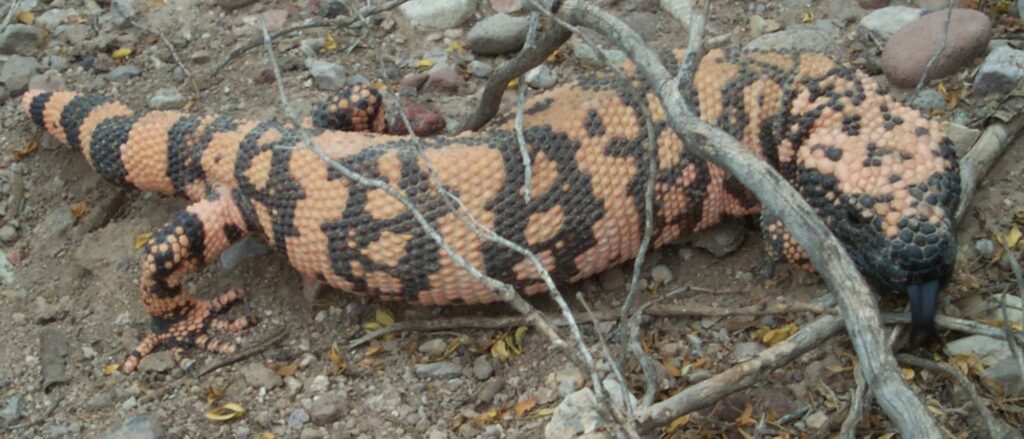
Gila Monster (Heloderma suspectum)
The Gila monster (Heloderma suspectum) is one of only two venomous lizards in North America. It has a stout body, bead-like scales, and is brightly patterned in black and orange or pink. Adults can reach lengths of up to 22 inches.
The Gila monster prefers rocky, arid foothills but may be encountered in canyons, wash bottoms, or among desert scrub. Gila monsters are slow-moving and not aggressive but will defend themselves if provoked. Their venom is delivered through grooved teeth rather than fangs, and bites, while rarely life-threatening, are extremely painful and require medical attention.
Venomous Spiders
Southeastern Arizona, with its diverse deserts, grasslands, and mountain habitats, is home to a remarkable array of wildlife, including several species of spiders. For search and rescue (SAR) teams operating in this region, understanding which spiders pose a threat due to their venom is essential for both personal safety and effective response to incidents involving spider bites.
While many spiders in Arizona are harmless and play vital ecological roles, a few species possess venom potent enough to cause significant medical issues in humans. The two primary groups of concern in SE Arizona are the widow spiders (genus Latrodectus) and the recluse spiders (genus Loxosceles). Additionally, tarantulas and other large spiders inhabit the region, but their bites are rarely dangerous and usually comparable to a bee sting
Widow Spiders
The most notable widow spider in SE Arizona is the Western Black Widow (Latrodectus hesperus). Occasionally, the Brown Widow (Latrodectus geometricus) may also be encountered, though it is less common.
Adult Female Black Widow spider have shiny, jet-black body with a distinctive red or orange hourglass marking on the underside of the abdomen. The body length is typically 1/2 inch, legs extend the apparent size to about 1 to 1.5 inches. Male and Juvenile Black Widows are much smaller, lighter in color, with variable markings; rarely bite humans.
Widow spiders seek dark, sheltered environments and are often found: Under rocks and logs, in wood piles, sheds, garages, and outhouses, beneath outdoor furniture or debris, and in caves, abandoned burrows, or crevices.
A bite from a female black widow can be serious, especially for children, the elderly, and those with compromised immune systems. Symptoms may include:
- Pain at the bite site, often spreading to the abdomen, back, or chest
- Muscle cramps and spasms
- Generalized sweating
- Nausea or vomiting
- Weakness and elevated blood pressure
- Restlessness and anxiety
- Bite site may show only minor redness or swelling
Symptoms usually appear within 30 to 60 minutes and can last from hours to several days.
First Aid and Response:
- Call emergency medical services (EMS) if severe symptoms develop
- Wash the area thoroughly with soap and water
- Apply a cool compress to reduce pain and swelling
- Keep the affected limb elevated and immobilized
- Monitor for difficulty breathing, severe pain, or allergic reaction
- Hospitalization and antivenom may be required in severe cases
Recluse Spiders
The Arizona Brown Spider (Loxosceles arizonica) and related Loxosceles species are present in SE Arizona but are much less common than widows. Most bites attributed to brown recluse spiders in Arizona are misdiagnoses.
This species has a light to medium brown body, with a darker, violin-shaped (fiddleback) marking on the cephalothorax. The body length is about 1/4 to 1/2 inch with six eyes arranged in pairs (most spiders have eight).
Recluse spiders prefer undisturbed areas inside sheds, basements, storage boxes, or piles of clothing. Also, under rocks, bark, or debris in dry, sheltered outdoor locations. They are rarely encountered in open, well-traveled areas.
Many recluse bites go unnoticed initially due to minimal pain. Within hours to days, the following may develop:
- Redness and tenderness at the bite site
- Blistering and ulceration, sometimes progressing to tissue necrosis (rare)
- Mild to moderate pain, swelling
- Occasionally, systemic symptoms: fever, chills, body aches, nausea
- Severe reactions are uncommon but can include hemolysis and kidney involvement
As always remain calm. Most bites do not require emergency care. Clean the wound with soap and water and apply a cool compress but avoid ice directly on the skin. Seek medical care if the bite area enlarges, becomes ulcerated, or shows signs of infection. Monitor for systemic symptoms, especially in children or those with underlying conditions. Surgical intervention is rarely necessary but may be indicated for large or non-healing ulcers.
Scorpions
Southeast Arizona is home to a variety of scorpion species, including the potentially dangerous Arizona bark scorpion (Centruroides sculpturatus). Due to the region’s climate and terrain, scorpion encounters are not uncommon for residents, hikers, and Search and Rescue (SAR) teams. While most scorpion stings are not life-threatening, proper assessment and treatment are crucial, especially in the wilderness context where resources may be limited and evacuation times extended.
Scorpion Species in Southeast Arizona
Arizona Bark Scorpion (Centruroides sculpturatus): The only species in the U.S. known to have venom potent enough to cause severe symptoms, especially in children, older adults, and those with underlying health conditions.
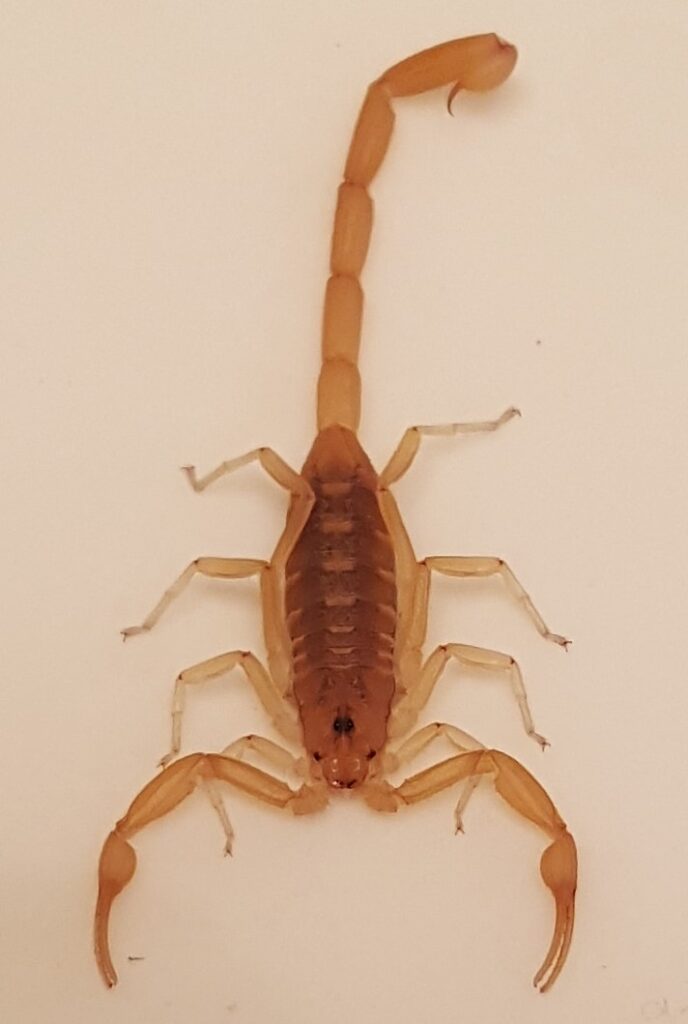
Striped Tail Scorpion (Vaejovis spinigerus): Common but generally delivers mild stings.
Giant Desert Hairy Scorpion (Hadrurus arizonensis): Largest U.S. scorpion; venom is less toxic but can cause pain and local reactions.
Scorpion Sting
Scorpion stings occur when the arthropod delivers venom through its stinger, usually in self-defense. Typical scenarios include nighttime activity, lifting rocks/debris, or accidental encounters in shoes, clothing, or bedding. Common symptoms include:
- Local: Immediate burning or sharp pain at the site, redness, mild swelling, numbness or tingling.
- Systemic (serious cases, mostly Arizona bark scorpion):
- Widespread numbness, tingling, or muscle twitching
- Difficulty swallowing, excessive salivation
- Restlessness, agitation
- Difficulty breathing, drooling (in children especially)
- Abnormal eye movements
- Vomiting
Immediate Field Response
If a Search and Rescue team member or subject is stung, follow these steps immediately:
- If a Search and Rescue team member or subject is stung, follow these steps immediately:
- Remove the patient from further risk.
- Reassure and calm the patient. Anxiety can worsen symptoms.
- Clean the wound with soap and water if available, or use a clean, damp cloth to minimize infection risk.
- Apply a cool compress (not ice directly) to the affected area to relieve pain and swelling for 10 minutes on, 10 minutes off.
- Immobilize the area and keep it at heart level.
- Remove rings, watches, or tight clothing near the sting area, as swelling may occur.
- Monitor for signs of severe envenomation, especially in children or those with underlying health issues.
What Not to Do
- Do not use a tourniquet, cut the wound, or attempt to suck out venom.
- Do not apply ice directly to the skin or immerse the limb in ice water; this can damage tissue.
- Do not give alcohol or sedatives to “calm” the patient.
- Do not delay evacuation for severe symptoms.
Venomous Insects
Search and rescue operations often require traversing remote, rugged, and sometimes densely vegetated areas where insect encounters are common. While many insects are harmless, a handful pose potential health hazards due to their venom or defensive secretions. Insect stings and bites can cause localized pain, severe allergic reactions, secondary infections, and (rarely) life-threatening envenomation. Awareness of these risks enables SAR teams to take preventive measures and respond efficiently in the field.
While Venomous Insects is a broad category, the most medically significant in Southeastern Arizona fall into several groups: ants (notably harvester and fire ants), bees and wasps, and certain true bugs. Spiders and scorpions are notable arachnids in the region but are technically not insects and are discussed separately in this handbook.
Harvester Ants (Pogonomyrmex spp.)
Harvester ants are common in grasslands, deserts, and disturbed soil across Southeastern Arizona. Their distinctive mounds can be seen along trails, open spaces, and sometimes near human-made structures. Most noticeable by the 4 to 35-foot-wide circular bare spots they create on the surface of the soil.
The sting of a harvester ant is intensely painful and contains alkaloid venom capable of causing prolonged burning, localized swelling, and (in rare cases) systemic allergic reactions. A single sting can remain painful for hours. Secondary infection is possible if the sting site is not kept clean. Prevention & Response:
If stung, clean the area with soap and water, apply a cold compress, and monitor for allergic symptoms such as hives, difficulty breathing, or swelling beyond the sting site.
Fire Ants (Solenopsis xyloni – Southern Fire Ant)
While the notorious red imported fire ant (Solenopsis invicta) is not established in Arizona, the native Southern fire ant is present and can deliver painful stings when its nest is disturbed. These ants are aggressive and capable of multiple stings.
Fire ant stings are notable for their burning pain, followed by the development of small, white pustules at the sting site. Multiple stings can occur rapidly and may lead to more severe reactions in sensitive individuals. First aid is similar to harvester ants: clean the area, apply cold compress, and monitor for allergic reactions.
Honeybees (Apis mellifera), including Africanized Bees (Apis mellifera scutellata)
Southeastern Arizona is within the range of Africanized honeybees (killer bees), which are highly defensive and more likely to attack in large numbers compared to European honeybees. Swarms may nest in hollow trees, rock crevices, or man-made structures.
Bee venom contains proteins that affect skin cells and the immune system, causing pain, swelling, redness, and, in susceptible individuals, severe allergic reactions (anaphylaxis). Africanized bee attacks can be particularly dangerous due to the number of stings.
Remove stingers by scraping with a blunt object do not squeeze. Monitor for anaphylaxis; use epinephrine as needed and seek medical help.
Wasps: Paper Wasps, Yellowjackets, and Tarantula Hawks
Paper Wasps (Polistes spp.): Build umbrella-shaped nests under eaves, in shrubs, or on structures. Stings are painful but usually not life-threatening unless allergic reactions occur.
Western Yellowjackets (Vespula pensylvanica): Aggressive scavengers, especially in late summer; stings can be multiple and severe.
Tarantula Hawks (Pepsis spp.): Not aggressive toward humans, but their sting is among the most painful of any insect. Fortunately, it is not dangerous unless allergic reaction occurs.
First aid is identical to bee stings, especially regarding allergic reactions.
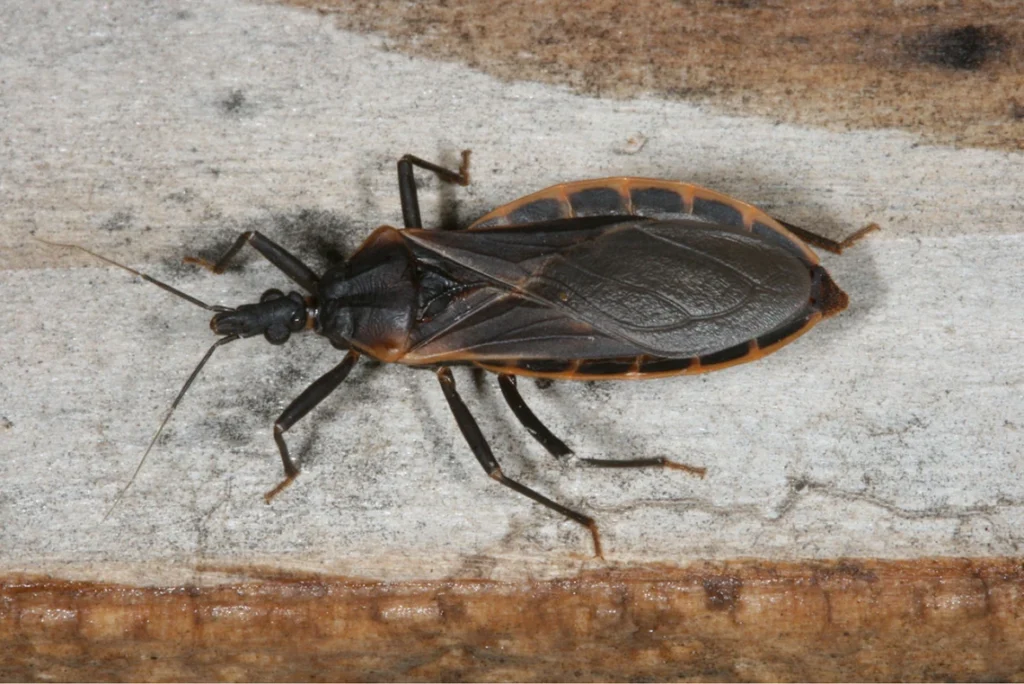
Kissing Bugs (Triatoma spp.)
Kissing Bugs are large, dark-colored nocturnal, bloodsucking insects common in Sonoran deserts. They are found in rocky areas, woodpiles, and occasionally in tents or sleeping bags. While their bite is not venomous in the conventional sense, their saliva contains compounds that can cause allergic reactions. In addition to local reactions (itching, swelling), kissing bugs can transmit Trypanosoma cruzi, the parasite responsible for Chagas disease, although transmission is rare in the U.S. University of Arizona Health Sciences experts caution against handling kissing bugs with your bare hands.
Seek medical attention for severe swelling, hives, or signs of secondary infection.
Blister Beetles (Epicauta spp. and others)
Blister beetles are soft-bodied insects that secrete cantharidin, a potent blistering agent, as a defense mechanism. Contact with these beetles, especially if they are crushed against bare skin, can cause painful blisters.
Within hours of exposure, painful, fluid-filled blisters develop. Ingestion (rare, usually via contaminated food) can be dangerous.
Clean affected areas with soap and water; do not rupture blisters. Seek